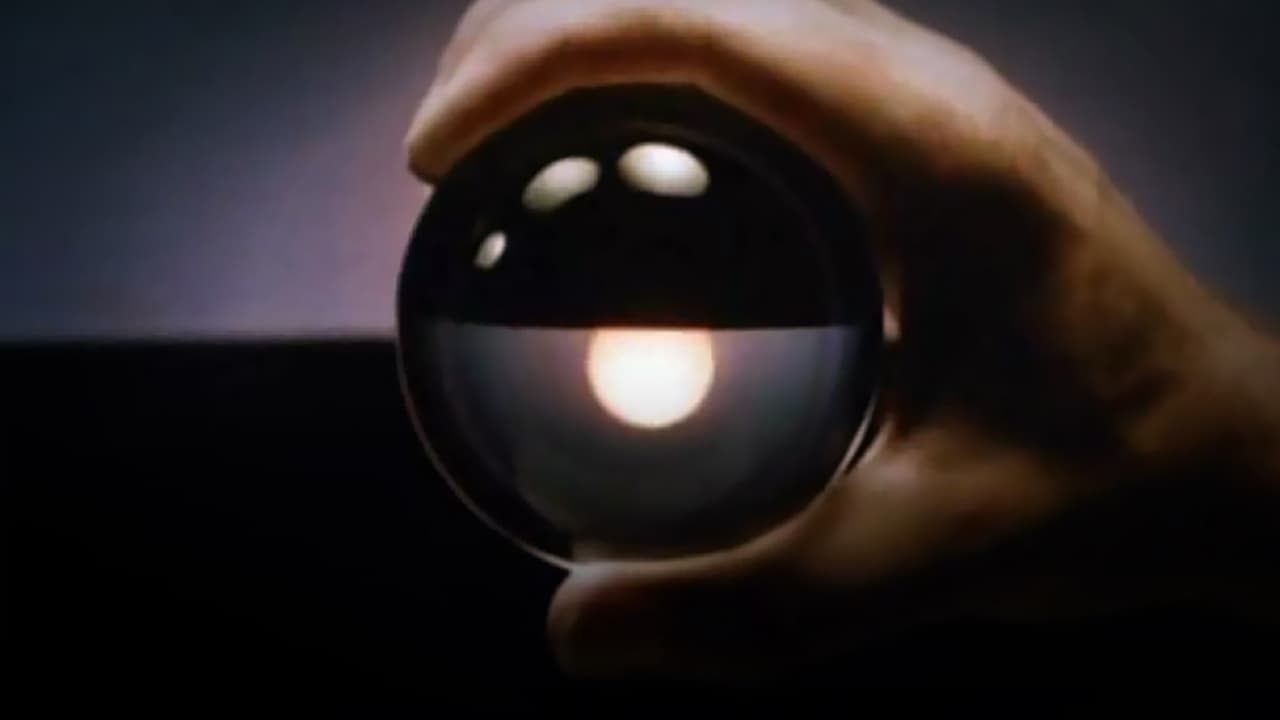
The Day the Universe Changed
S1 · E1IMDB:
8.7
Released
3/19/1985
Duration
0h 45m
Genre
Documentary
Country
United States
Cast
James Burke
Overview
Documentary series about the effect of advances in science and technology on western society in its philosophical aspects.
The Day the Universe Changed
Season 1 · Episode 1IMDB:
8.7Released
3/19/1985
Genre
Documentary
Cast
James Burke
Duration
0h 45m
Country
United States
Overview
Documentary series about the effect of advances in science and technology on western society in its philosophical aspects.
Episodes
 EP 1Available
The Way We Are: It Started with the Greeks
Written and presented by James Burke, this 10-part series traces the development of Western thought through its major transformations since the days of ancient Greece. Program one is an overview of the series, showing how a culture’s view of the world around it determines how it sees itself, and is reflected even in the smallest details of its customs and habits.
The Way We Are: It Started with the Greeks
Written and presented by James Burke, this 10-part series traces the development of Western thought through its major transformations since the days of ancient Greece. Program one is an overview of the series, showing how a culture’s view of the world around it determines how it sees itself, and is reflected even in the smallest details of its customs and habits.
EP 2AvailableIn the Light of the Above: Medieval Conflict: Faith and Reason
No description available.
In the Light of the Above: Medieval Conflict: Faith and Reason
No description available.
EP 3AvailablePoint of View: Scientific Imagination in the Renaissance
Shows that Western Europe’s rediscovery of perspective through the study of Arab optics led to revolutions in art and architecture. The West’s new-found ability to control things at a distance resulted in new methods of warfare and the confidence to make long voyages of exploration.
Point of View: Scientific Imagination in the Renaissance
Shows that Western Europe’s rediscovery of perspective through the study of Arab optics led to revolutions in art and architecture. The West’s new-found ability to control things at a distance resulted in new methods of warfare and the confidence to make long voyages of exploration.
EP 4AvailableA Matter of Fact: Printing Transforms Knowledge
Observes that the invention of printing and the advent of cheap paper forever transformed the nature of knowledge from the local and traditional to the systematic and testable. Nationalism, public relations, and propaganda are among the results.
A Matter of Fact: Printing Transforms Knowledge
Observes that the invention of printing and the advent of cheap paper forever transformed the nature of knowledge from the local and traditional to the systematic and testable. Nationalism, public relations, and propaganda are among the results.
EP 5AvailableInfinitely Reasonable: Science Revises the Heavens
Notes that investigators such as Copernicus, Kepler, Galileo, and Newton evolved better explanations of natural phenomena than those of Aristotle. Highlights the theories that led to a new conception of how the universe works and of man’s place in it.
Infinitely Reasonable: Science Revises the Heavens
Notes that investigators such as Copernicus, Kepler, Galileo, and Newton evolved better explanations of natural phenomena than those of Aristotle. Highlights the theories that led to a new conception of how the universe works and of man’s place in it.
EP 6AvailableCredit Where It's Due: The Factory and Marketplace Revolution
Locates the origins of contemporary consumerism in the English industrial Revolution, powered by religious dissenters barred from all activities except trade. The invention of the steam engine, new forms of credit, surplus wealth, and opening markets laid the foundation for industrial society.
Credit Where It's Due: The Factory and Marketplace Revolution
Locates the origins of contemporary consumerism in the English industrial Revolution, powered by religious dissenters barred from all activities except trade. The invention of the steam engine, new forms of credit, surplus wealth, and opening markets laid the foundation for industrial society.
EP 7AvailableWhat the Doctor Ordered: Impacts of New Medical Knowledge
Traces modern society’s recognition of the value of statistics to medical advances stemming from responses to the French Revolution and an English cholera epidemic. Identifies the origins of medicine as a science with the discovery of anesthesia, antiseptics, and bacteriology.
What the Doctor Ordered: Impacts of New Medical Knowledge
Traces modern society’s recognition of the value of statistics to medical advances stemming from responses to the French Revolution and an English cholera epidemic. Identifies the origins of medicine as a science with the discovery of anesthesia, antiseptics, and bacteriology.
EP 8AvailableFit to Rule: Darwin's Revolution
Tracks the expectation of change, fundamental to contemporary society, through the developing sciences of botany, geology, and biology to Darwin’s theory of evolution. Darwin’s theory, in turn, has been used as a justification for Nazism, communism, and cut-throat capitalism.
Fit to Rule: Darwin's Revolution
Tracks the expectation of change, fundamental to contemporary society, through the developing sciences of botany, geology, and biology to Darwin’s theory of evolution. Darwin’s theory, in turn, has been used as a justification for Nazism, communism, and cut-throat capitalism.
EP 9AvailableMaking Waves: The New Physics: Newton Revised
Points out that studies of the properties of magnetism, electricity, and light have led scientists to the realization that Newtonian physics is inadequate to explain all that they observe. The public, meanwhile, has continued to concentrate on the technological by-products of science.
Making Waves: The New Physics: Newton Revised
Points out that studies of the properties of magnetism, electricity, and light have led scientists to the realization that Newtonian physics is inadequate to explain all that they observe. The public, meanwhile, has continued to concentrate on the technological by-products of science.
EP 10AvailableWorlds Without End: Changing Knowledge, Changing Reality
Observes that over the centuries Western civilization has regularly shifted its conception of the nature of truth. The series closes with host James Burke's remarkably prescient assessment of the role in which modern computer networks are beginning to now play in shaping man's current conception of his reality as well as how they may well define the fundamental nature of all future human interaction. And while his message is ultimately a positive one, it is tempered with the warning that while the promise of the computer may indeed provide a framework for a future anarchism where human freedom is nourished and where every individual conception of reality is a valid one, it could conversely become of tool of totalitarian repression and conformity.
Worlds Without End: Changing Knowledge, Changing Reality
Observes that over the centuries Western civilization has regularly shifted its conception of the nature of truth. The series closes with host James Burke's remarkably prescient assessment of the role in which modern computer networks are beginning to now play in shaping man's current conception of his reality as well as how they may well define the fundamental nature of all future human interaction. And while his message is ultimately a positive one, it is tempered with the warning that while the promise of the computer may indeed provide a framework for a future anarchism where human freedom is nourished and where every individual conception of reality is a valid one, it could conversely become of tool of totalitarian repression and conformity.
Cast

Unknown Role